How Dunes and Salt Marshes Hold Sediment
Dunes and salt marshes hold sediment through different plant-and-water processes. Learn how to tell them apart by reading sand, mud, vegetation and tidal flow.
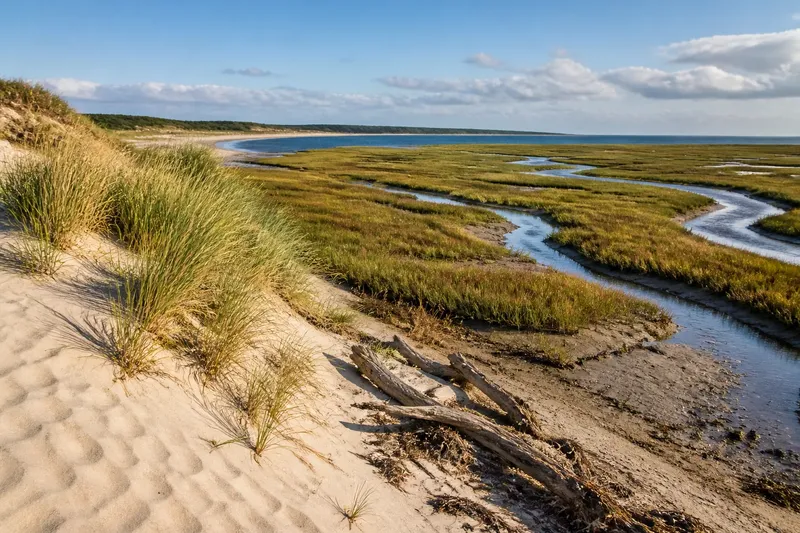
How do dunes and salt marshes hold sediment? On a shore, the difference is visible beneath your feet: loose, rippled sand points to wind-shaped dunes, while fine, damp deposits and branching creeks suggest a marsh shaped by tidal water. Both habitats gather and retain material, but plants slow different forces in each one.
Wind gathers sand into dunes
A dune begins where wind-blown sand meets an obstacle. Driftwood, a low ridge or hardy vegetation can slow the grains enough for them to settle. As sand accumulates, grasses such as marram or beach grass may take root where local conditions suit them. Their leaves and stems interrupt the wind, while their roots help bind the sand.
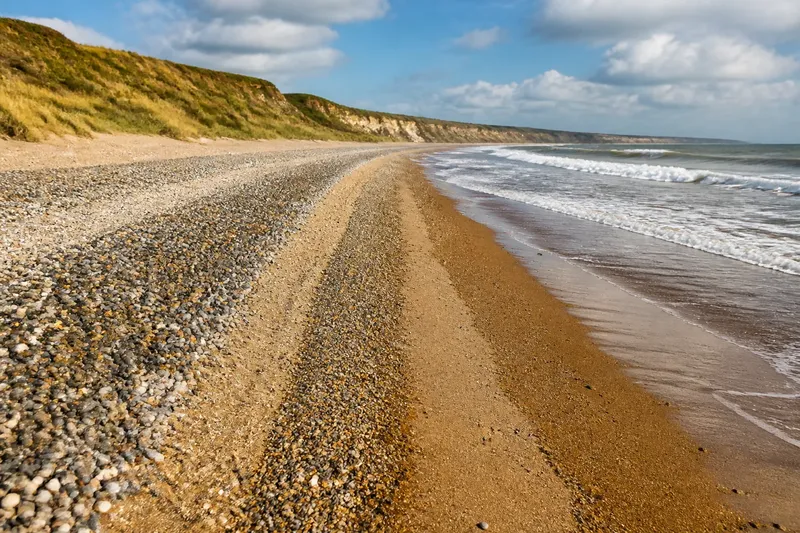
Look for changes in texture as you move inland. The seaward face may be bare or sparsely covered, with ripples and small slips showing where wind has moved grains. Farther back, vegetation can become thicker and the surface more stable. Exposure, sand supply and disturbance all influence how a dune forms, so the pattern varies between shores.
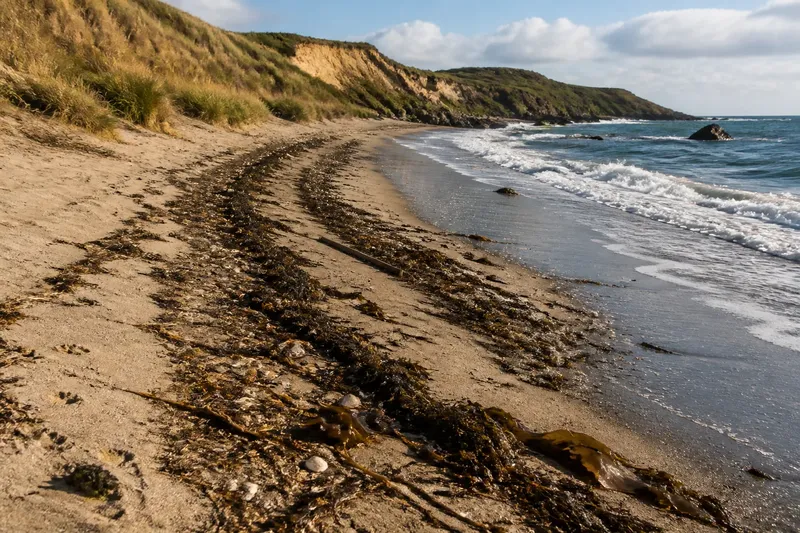
Wrack and driftwood at a dune’s foot can act as temporary sand traps. In a natural setting, their position may explain why a small mound has formed behind them; do not assume they should be cleared.
Tidal plants help salt marshes collect mud
Salt marshes develop on sheltered, low-lying shores where tidal water can spread across a gently sloping surface. Plant stems and leaves create drag as water passes. Suspended fine sediment can then settle among the plants, while roots and buried stems help hold some of it in place.
Rather than a wind-sculpted ridge, expect a low patchwork of vegetation, shallow pools and creeks. Channels carry tidal water across the marsh and drain it as the tide falls. Their edges may expose layers of mud or fine sand; plant cover often changes with the length of flooding and the soil’s salinity.
Water moves more strongly along a creek than across much of the marsh interior. As a result, sediment settles unevenly, creating small differences in surface height, drainage and plant cover.
Wind, tides and shelter favour different habitats
Dunes need mobile sand, wind to carry it and a place where grains can accumulate. Salt marshes need a sheltered, low shore where tides deliver suspended material and plants can tolerate salt and periodic flooding.
Wave exposure affects the habitats in different ways. Strong exposure can shift or remove sand from a dune front. A marsh usually forms where direct wave action is limited enough for fine sediment and vegetation to persist. A coast can contain both, but their positions depend on its shape, sediment supply and local water movement.
Say you reach a sheltered bay with a low grassy margin and a sandy ridge behind it. You observe tidal creeks and fine, damp deposits across the margin, then wind-shaped sand and rooted grasses on the ridge. The likely reading is a creek-cut marsh beside a higher dune, not one continuous habitat.
Read vegetation alongside the sediment
Plant identity can help, but it is not enough on its own. Similar-looking plants may grow in different coastal settings, and species vary from region to region. Check what the plant is growing in and how water reaches it.
- Check sediment texture: if the ground is loose and gritty, treat a dune as more likely; if it is smooth, cohesive mud or fine deposits, consider a marsh and check for tidal water routes.
- Look for branching creeks: if channels cross the surface and connect with the shore, infer regular tidal flow; if there are no such channels, look for other evidence before identifying a marsh.
- Compare plant form and position: if upright stems spread across a low, wet surface, consider a marsh; if dense grass grows on a sandy ridge, consider a dune, then verify with the sediment.
- Check surface wetness: if shallow pools or damp ground remain after the tide, consider a marsh; if sand above the active beach is dry, consider a dune, while allowing for recent rain or spray.
- Look for recent movement: if sand ripples or bare scours are visible, consider wind or wave redistribution; if leaves carry a fine silt coating, consider recent tidal inundation and check nearby channels.
- Note the nearest route for air or water: if wind can reach exposed sand, assess whether it is feeding a dune; if tidal water can spread across a low surface, assess whether it is supporting a marsh.
On a walk, pair one plant observation with the sediment at its base. That combination is usually more useful than a plant name alone.
How do dunes and marshes trap sediment?
How does dune grass catch sand?
Leaves and stems reduce wind speed near the ground, allowing airborne grains to settle. Roots help stabilise the sand, though exposed dune faces can still shift.
How do salt-marsh plants collect mud?
Stems slow shallow tidal water, giving suspended fine particles time to settle between plants. Roots and buried plant material help keep some of that sediment in place.
Can a coast have both habitats?
Yes. A sheltered shore may have a marsh across its low intertidal margin and dunes on higher, sandier ground nearby, if local conditions support both.
What should I avoid while observing them?
Stay on established paths where they exist, and avoid trampling vegetation or disturbing creek banks. These surfaces can be easily marked, and local access rules may apply.
Record what each habitat holds
Dunes hold sediment mainly by interrupting moving air and binding sand. Salt marshes hold it by slowing tidal water and reinforcing fine deposits with vegetation. The forms differ because the forces, water levels and shore positions differ, even where both habitats share one coastal landscape.
For a useful field note, record plant cover, sediment texture and the nearest route for wind or water. When comparing dunes and salt marshes, those details help you identify how each habitat gathers and retains the material beneath it.