When the Coast Became a Place to Visit
When the coast became a place to visit, transport, promenades and bathing facilities reshaped seaside towns. Learn to read leisure alongside the working shore.
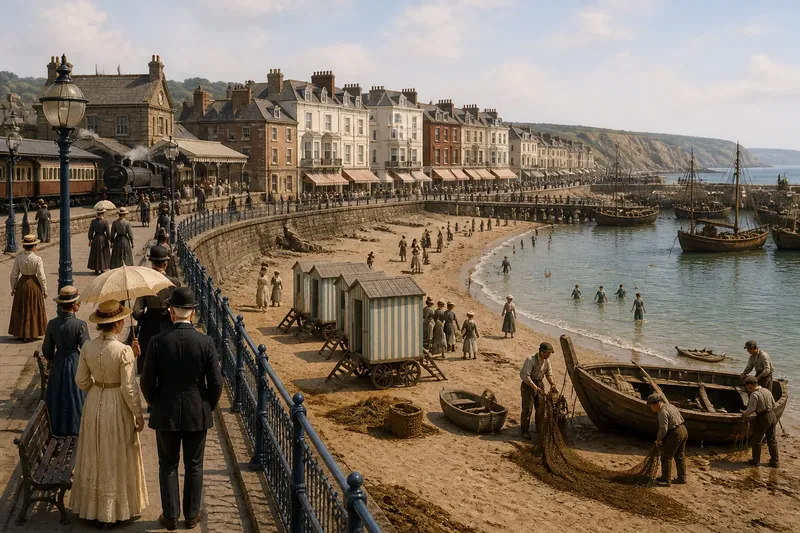
Why did people begin travelling to the coast for leisure, and what changed when they arrived? When the coast became a place to visit, roads, railways and public facilities helped turn working shores into destinations without erasing their older uses.
A promenade above the beach, a station facing the sea, a bathing hut or a harbour street lined with lodging houses can each reveal how seaside life was organised. Look closely and you can see who was expected to arrive, where visitors were directed and how leisure fitted alongside coastal work.
Working shores made room for visitors
For many coastal communities, the sea was a route, a workplace and a source of food and materials. Boats, landing places, storehouses and markets connected settlements to the water through everyday work. A beach might be used to haul vessels ashore or mend nets, rather than being kept clear for strolling.
People had long swum, walked and gathered beside the sea. What changed was the growth of organised travel for leisure: visitors could come chiefly to spend time at the shore, rather than to work or visit family. That purpose brought new demands on shared space. A strand could serve boats and bathers, while a harbour path carried workers and holidaymakers side by side.
Read the working pattern beneath the visitor-facing one; the coast rarely became a blank leisure ground.
Transport turned distance into an outing
A seaside visit depends on more than an attractive view. Roads, ferries and rail connections make a shore reachable within a traveller’s available time, while lodging and food make a stay possible. As routes improved in different regions, some towns gained regular visitors and new services.
A bay that felt remote to people inland could become a manageable outing once a route connected it with a city or market town. Stations, piers and coach stops acted as gateways, where visitors shifted from travelling to the slower routines of a holiday.
The effects were uneven. A town near a convenient route might develop visitor services while a neighbouring shore remained harder to reach. Some places attracted day-trippers; others relied on longer stays. When reading a coastal map, notice the routes leading to the water as well as the shoreline itself.
Scenery gave visitors new reasons to look
Changing tastes in landscape helped make the coast an attraction. Some visitors sought relief from crowded streets and enclosed workplaces; others came for cliffs, open horizons, sea air or the sense of standing at the edge of familiar land. A view could become a reason to travel.
Paths towards overlooks, benches facing a bay and hotels positioned to frame sea views gave this interest a physical form. Promenades offered a route for seeing and being seen. Visitors did not simply admire the coast from a distance; they moved through it along paths and viewpoints that made certain features easy to notice.
Scenery was selective. A visitor’s view might foreground a headland and leave a working harbour, rough ground or an awkward route out of sight. A viewpoint tells you what a place invited people to notice.
Sea bathing made the water a public attraction
As swimming and sea bathing became established leisure activities in many places, visitors came not only to walk beside the water but to enter it. Changing facilities, bathing machines or huts, designated areas and rules of conduct helped organise an activity that had often been local and informal.
These arrangements reflected ideas about health, modesty and respectability as well as recreation. Bathing required decisions about clothing, supervision, privacy and access, making the bathing place a designed social setting even where the open water remained its main attraction.
Access was not equal. Charges, travel costs, social conventions and restrictions on where particular groups could bathe affected who could take part. A beach could be physically open yet divided by custom, facilities or control. If you see an old bathing structure, ask whose comfort it was built to serve.
Promenades made leisure visible
A promenade gave seaside visiting a distinctive rhythm. People could walk a shared route, pause at a railing and watch the sea, while also meeting acquaintances and observing other visitors. Leisure became a public performance of clothes, manners and movement.
Design balanced access with separation. A raised walkway could offer a clear view while keeping pedestrians apart from working beach activity. Railings and steps channelled movement; shelters offered a pause from wind or rain. Gardens, kiosks and entertainment venues might gather nearby, turning a walk into part of a wider outing.
Promenades expressed decisions about where visitors should walk and which parts of the shore should look orderly and welcoming. Follow a promenade’s route and notice where it connects, overlooks or bypasses.
Visitor businesses reshaped working towns
Regular visitors encouraged local businesses to adapt. Lodging houses, cafés, bathing facilities, shops and entertainment venues joined or reshaped existing trades. Some households let rooms seasonally; others supplied food, transport or services. Visitor businesses could create livelihoods while tying parts of a town to a seasonal rhythm.
Buildings might be divided into guest rooms, façades made more inviting and waterfront streets lined with businesses aimed at people with time to spend. Harbour work could continue nearby, creating a layered landscape rather than a clean transition from industry to leisure.
Say a small harbour town has a working landing place and a short row of lodging houses. Imagine a new transport link brings more visitors: residents convert spare rooms into accommodation and open a tea room near the waterfront. The expected visible result is a busier street and more signs for visitors, while boats and working sheds remain in the same view. To understand a seaside town, read its visitor services alongside its older work.
Public access depended on routes and rules
A coast may look open, but paths can be blocked, access points distant and stretches of waterfront privately controlled. The seaside’s claim to be a shared public place depended on routes, rights and local decisions, not simply on the presence of a beach.
Promenades, public gardens, bathing places and maintained paths could make access easier for residents and visitors. They could also direct people into designated areas and leave other spaces less accessible. A carefully arranged public front might conceal an unwelcoming boundary just beyond it.
Leisure also depended on free time and the means to travel. Social expectations could make some visitors feel more entitled to occupy public space than others. When assessing a visitor place, look for the path in as well as the view out.
What can coastal features tell you about leisure?
Why did one seaside town attract visitors before another?
Transport links, lodging, local investment and scenery that matched visitors’ tastes could all contribute. A nearby coast might remain less visited if access was awkward or services limited.
Did seaside leisure replace coastal work?
Often it did not. Fishing, shipping, repair work and visitor services could occupy nearby parts of the same town, though their relative importance changed.
How can a promenade reveal ideas about public life?
Its route, entrances, seating and relationship to working spaces show how movement and viewing were organised. These details can suggest who was expected to use the path and what behaviour it encouraged.
Was the seaside equally open to everyone?
No single answer fits every coast or period. Transport, cost, local rules, social conventions and physical access shaped who could visit and which parts of the shore they could use.
Coastal leisure remains layered into the landscape
Seaside places retain evidence of earlier expectations. A promenade may still guide an evening walk; a former bathing hut may survive as a landmark; a road or station may funnel visitors towards one part of the waterfront. New uses gather around older structures, while everyday local activity continues beside recreation.
The history of coastal leisure is a story of overlapping purposes, not a simple change from work to visiting. Transport made some shores reachable, new tastes made certain views desirable, and public facilities gave visiting a shared form. These developments affected places and people differently.
To understand when the coast became a place to visit, trace how people arrived, where they paused, which buildings faced the water and which routes remained open. The meeting point between visitor facilities and working shore often offers the clearest evidence of how a coastal town changed.